Showing posts with label New Holland Brewing. Show all posts

Thursday, October 24, 2013

Shout out on TODAY.COM

Thanks Jim from the Beer & Whiskey Brothers for the shout out on TODAY.COM following the SAVOR event:
Link: (http://www.today.com/food/9-unique-brews-savor-beer-fest-6C10395234)

Article:
If you’re a beer geek who’s lived a virtuous life, you can only hope your heaven is something like SAVOR, the beer and food pairing event put on by the Brewers Association this past weekend in New York City. It was truly a brewhound’s paradise.
This annual soiree is a fancy affair, designed to celebrate the elegance and artistry of finely crafted beers by coupling them with gourmet foods that bring out the best in their flavors. While upscale (and at $170 per ticket, expensive), SAVOR is anything but snobby - the brewers themselves are fun and down to earth people, making it impossible for the proceedings to be stiff or uptight. 
There were over 150 beers on hand, and each was paired with a scrumptious morsel of food, like a duck rillete with peach hoisin on black brioche bread, or a crispy pork belly in kimchee rice balls with green garlic aioli. There were also stations overflowing with artisanal cheeses, organic chocolates, and raw oysters.
These gourmet bites were delightful, but I soon found my beer-geek self forgetting about the food and focusing on the beer, as many were extremely rare, or in some cases, only available at the event.
“We did our first SAVOR event a few years back, and we decided to bring a couple of our best-selling beers,” said Laura Bell, marketing director for Bell’s Brewery. “We took a look around and saw the rare beers that others had brought, and we knew we had to step up our game in the future.”
Bell’s did just that this year, bringing their tart and dry Raspberry Wild One, a whirlwind of sweet raspberries, puckering sourness and oaky funk, and Black Note, a silky imperial stout they should rename “velvet fudge” for its chocolaty smoothness.
Some other standouts included Left Hand Brewing Co’s Good Juju, a 4.5 percent ABV ale with a lovely snap of ginger on the back of the flavor that made it unnaturally satisfying for a low ABV brew. It’s not a rare beer, but it’s rare that a beer this low in alcohol tickles my fancy.
Denver Beer Co’s 5.6 percent ABV Graham Cracker Porter was a roasty treat, with notes of vanilla and smoke and graham crackers that just begged for a little bite of chocolate, which happily could be found just a few steps away, courtesy of Green & Black’s Organic Chocolates.
Heavy Seas’ Holy Sheet made quite an impression as well, with its big tastes of dark fruit, caramel and brown sugar set off by a boozy undercurrent of brandy, compliments of the barrels in which this 9 percent strong ale was aged. It was paired with roasted duck and balsamic peach with toasted pumpkin seeds, and I can attest that duck, peaches, caramel and brandy are like the Beatles of food (Ringo is the brandy).
Other fun brews included Cigar City’s Cucumber Saison, a fragrant and grassy summertime treat, and Willoughby Brewing Co’s Peanut Butter Cup Coffee Porter, which featured big hits of peanut butter and coffee, both of which were sent into the stratosphere when paired with a butterscotch brownie topped with crushed pretzels.
But for me, the big winner of the night was New Holland Brewing Company, thanks to the wizardry of their wood master Tim Faith, whose work was put on full display during one of the evening’s educational salons.
His Smaug’s Breath, a variation of the brewery’s Dragon’s Milk stout aged with toasted chile de arbol, showed just how succulent a spiced-up stout can be (not an easy feat). It was paired with a coconut Gianduja chocolate made with fresh ginger ganache, and the Smaug’s Breath simply set the ginger in the candy on fire in the most delicious way imaginable.
Then there was New Holland’s Night Tripper Reserve, a variation of their imperial stout that has spent time in Bourbon, rum and whiskey barrels. I’m a guy who loves big boozy beers, and this 10.8 percent levitation of flavor delivered like few others I have tasted.
After its New York fling, SAVOR is returning to its regular Washington D.C. home next year, and if you’re a beer geek who’s looking for a little taste of heaven, I recommend you don’t miss it.

Blogging again? The rest of SAVOR

Well,
It's been my longest stretch without posting on this blog. And I've finally given into the guilt.
A lot has happened this summer, so I figured I'd finish off with the SAVOR Post and continue with everything else, post by post.
Savor was, as one might expect. Amazing.
Friday, I met Greg at the hotel and he rented a bike. With me on foot, we cruised around the city, stopping at wholefoods, and the NY Farmers Market. We finished the run with lunch at Birraria, the Dogfish Head and Italian Brewer collaboration restaurant on top of the building that housed the renowned "Eataly." The Night was spent going to the Blind Tiger, and a few other bars.
That night was spent having dinner at the hotel with none other than Garrett Oliver, Brewmaster of Brooklyn Brewing Company.
The event itself was glorious. There were samples of food paired with every beer. An Oyster Bar, a Cheese Bar and a Chocolate bar. I met a lot of really great people and ate and drank a lot of fantastic crafted food and beverage. New Holland did a Salon/Pairing with Smaug's Breath and Barrel Aged Night Tripper.
That night we had dinner at a great gourmet restaurant with the guys of Left Hand and Bell's. I took off around 1am and biked home on a Citibike.

I wish there was more to say, but having been almost 5 months ago, and several more posts to go, I'll keep it short.

Friday, June 14, 2013

Pre-SAVOR Day 1

Luck would have it, I get to go to SAVOR!
My first experience with this event was over 2 years ago while sitting in the living room of our senior house, cleverly called "The Dump." We were watching one of the first episodes of brewmasters on the Discovery Channel. It was the premier release of Dogfish Head's "Bitch's Brew" at the Savor event. I told myself I had to go someday.
Well that day is today.

A recap of yesterday:
I got to the Airport around 8:00am for a 9:55 take-off connection to Washington DC, whereupon I would have a 3 hour layover before another flight to NY which would get me in around 4:00.
At 9:15 the lady called me up to the podium and asked why I was hopping around so much? Why don't I just take a direct flight to Newark? Well, hell ya! I said. It left at 11:00 and we arrived at the Newark airport at 1:15.
Following trips on several units of transport, I checked in at the ACE Hotel (the rooms are very hip and cool) and hit the roads for some miles. Did a loop and a half around central park for nearly 11 miles. Got back to the hotel, showered, and met Fred in the lobby for a drink before taking off for the night's events.
Irony would have it,
We waited for a cab for a few minutes, and one drives up. And who gets out? Sam Calgione of DFH. He greeted Fred like old friends, and we shook hands.
This trip is going great so far.
We took our cab to a place called Spuytan Duyval, a beer bar in Brooklyn with an old apothecary atmosphere with old wooden saloon-like decour and jars of vegetables and fruit lining the backbar. Their tap-list was dominated by beers I could hardly pronounce...Aside for the New Holland Tap-takeover we were having.
We hung out there for a couple hours for Fred's debut book signing (an awesome book by the way: The Beervangelist's Guide to the Galaxy)
Ate some dinner from a local place called Fette Sau. I actually ate ribs... But trusted Greg on where they came from.
We left around 9:15 to head over to the Brewer's Pre-SAVOR-party at Brooklyn Brewing Co. Where faces like Charlie Papazian were in attendance. Had some great beer, and mingled with fellow industry folk. They had a couple food-trucks lined up outside (in the rain). I had a bunch of veggie pitas and their Greek feta fries.
Around 10:45 or so they gave last call and we downed our last beers and pitas and headed to a place called Barcade, a large bar with, you guessed it....a lot of arcade games. The taplist was pretty fantastic too. I ordered a Festina Peche (Berliner research), of which would be my last beer of the night. Water followed. By 1:00 I was ready to go. Fred and I and another fellow industry guy left to head back to Manhattan.


I brought my shitty camera, but only got a few photos before it just stopped working, I'll post what I have when I get the chance.

Cheers!

Friday, May 24, 2013

New Holland Foudre Project

For the last several months I've been researching Foudre's ( The French method of spelling - while the Dutch way is "foeder"). The opportunity arose when I took over the barrel aging program for New Holland. The sour program had already trippled its barrel count, but that came with the hard realization that the work of tasting and blending each barrel is, in fact, an arduous task. With the post-blending reflection of Blue Sunday, I knew there had to be a better, more efficient way of blending bulk sour beer. The answer was Foudre's.
I asked Brett if I could begin researching and constructing a proposal. His reply - "Yeah, let's get some!" So I began searching. By talking to brewmaster Tim Hawn of Dogfish Head, Lauren Salazar of New Belgium, they were able to point me in a direction. Still, contacting numerous cooperages, barrel brokers, brewers, and tonnellerie was the bulk of the work. Months of digging and numerous dead ends later, I started to find some options. But, they were either far to expensive, too small, old, lacking structural insurance, or just crap. Finally I found Seguin Moreau, a barrel broker/cooperage that seemed to have the perfect option - 9 x 45hl horizontal French oak Foudre's that had just been emptied of white wine. Upon receiving this notification, a proposal was sent to everyone that could have influence on the financial decision of their purchase. This took more time than expected.  I had let the team know the urgency of this deal, particularly because within a week 3 had already been called for. This got things moving. 

My arguments for getting our Foudre's:
 - Increased sour volume, decreased needed barrel space
 - Ease of blending one tank versus tasting and blending 20+ barrels
 - Consistency across vintages
 - Stability of vessel and potentially indefinite use
 - Decreased oxidation
 - Decreased potential of infecting "non-soured" beers
 - Opportunity to expand variety of NHBC's sours

A successful proposal, a fast reaction and several meetings later, our Foudre's we stuffed into a 40' flatbed and on their way from France to Holland, Michigan!

So what's a foudre?
Foudre's are large oak vats, that can range from a couple hundred gallons, up to several thousand (think of Dogfish Head's Palo Santo Vats). Prior to the universal adoption of stainless steel, ALL beer was fermented and matured on wood. By the early 20th century, using oak was nearly phased out except for traditional brewing cultures around Europe. Today, they are primarily utilized in the wine industry to impart the tannic qualities of the wood. However, sometimes these vats become spent - wherein the time it takes to extract those lignan characteristics from the wood becomes longer and longer to reach that acceptable level for that particular wine. Similarly, occasionally a batch of wine will become infected with a known variant of Brettanomyces. Once in there, it is near impossible to get rid of thus rendering the vessel a festering tub of uselessness and a point of further contamination for the rest of the winery.
Brewers love when that happens....

I should note that distilleries rarely use anything larger than the common 53 gallon barrel due to the SA to volume ratio of wood to spirit. Extraction is minimal, and time is exhaustingly long to get the same desired oak/vanillin elements.

So these barrels are put on the market by brokers and cooperages and the brewers these days are snatching them up like no other!

The Plan?
Our Foudre's that arrived April 23rd, are 45 hl (38 barrels or 1188 gallons) Horizontal oak tanks roughly 6 feet wide and 7+ feet long. They came with large oak floor craddles, and all the stainless accessories - Drain valve, beer valve, sample port, sight glass, and manway door - as well as a large rubber bung at the top.
The plan currently is to use two of them for Blue Sunday. The rest will be used for a few new brands we are testing the waters with, that have yet to be publicly announced.

Stay tuned as the barrel program flourishes!


Tim Faith


Tuesday, April 16, 2013

Brewing Kvass at New Holland Brewing Co.

I first heard of Kvass during my Junior year in college whereupon I was researching different possibilities  of making beer. This went along with my interests of other fermentates such as Kefir, Kombucha, Saurkraut etc...

Conveniently, my brother at the time worked at a Hyvee Bakery in Iowa City. Almost daily they threw away their stale bread, without even giving it to any soup kitchen or anything. My senior year, I asked Luke if he could save me a couple boxes worth of the bread. Weeks later, he had accumulated three larges containers worth of predominantly stale white and wheat loaves. I knew that traditionally Kvass was formulated on rye and other dark breads, but I had to use what was available.
First kvass Homebrew (Feb. 2011)
My first attempt was a bit of a crap shoot. I sliced all the bread into smaller pieces, threw a couple pounds of malted wheat along with clove, cinnamon sticks and bay leaves, all into the mash. I don't particularly remember the rest of my procedures, but do recall that it was fermented with a wild (house cultured) yeast and blended with Lemon and Kombucha. This sat for nearly six months to fully reach its potential. The finished product tasted extremely similar to a pilsner and was just as bright!
I brought a bottle to my interview at New Holland.

Brew Day inventory (300+ Loaves)
Fast forward a couple years later from my first kvass brewday and I got the opportunity to brew a version on a commercial 10 bbl system at New Holland's brewpub. I had been collecting bread from various festivals for nearly 4 months prior. Similarly, De'Boer's bakery would drop off the occasional box of hardly stale, sliced bread; and I would frequent Crust 54 on most weekends to pick up what was left of the stale bread. By February I had accumulated nearly 300 loaves, all that was left was tank space and a brew day to fit into the schedule.
Brew Day
Every type of bread
April 2 rolled around and I had my opening. The night before I took all the bread out of the pub freezer and let it defrost in the brewhouse area. I had planned my recipe around some traditional aspects, but with the intention of balance and complexity.


To the mash:
 - 200 Ibs Pilsner Malt
 - 50 Ibs various malted grain (Abbey, Special B, Ruby, Pale, Crystal 45)
 - 300 Loaves of bread (Wheat, White, Rye, Raisin, Spiced, Multigrain, even some cheddar bread!)
 - 20 x Cinnamon Sticks
 - 1 Ib crushed Coriander

The decision behind this recipe was to use the malt to be more of a fermentable sugar and biscuit backbone to fuel the bready flavor profile. Using just the bread would not get my intended gravity of 2-3.5% ABV (though the traditional Kvass stands only between .5% and 1.5% ABV). Similarly, Kvass utilized whatever ingredients could offer a source of sugar, therefore to comply with that tradition, I used whatever stale grains that were left in partial bags around the brewery. The cinnamon sticks and coriander further encouraged some bready, spiced complexity.
I preheated the mash and began mixing in the grain. Once all the grain was added, I continued to maintain temperature around 160 to ensure enough body and residual sugar in the finished product. My next step was to add the bread. This took quite sometime, as half the loaves were whole and unsliced. I did my best to slice all the bread. The mashing process took a little over an hour. One recommendation here is to use as much water as possible so as you work on adding the bread, the grain bed settles and the makes its own floating mash and doesn't make a sticky aggregate of soup, thus potentially clogging the mash when it comes to sparging.
Filled the entire Mash-Tun with bread!

The run-off went well and the boil lasted 90 min, during which 1 Ib of cascade was added and 2.5 gallons of molassas. I used our normal house yeast for fermentation of which will take an undecided extent of time. Gravity came out to be around 9.5 Plato, and it's finishing around 4.5-5.0 Plato. This ultimately will get us an alcohol of 2.5% ABV...Perfectly sessionable. The wort smelled of ginger snap cookies and toasted rye bread.

I will post tasting notes upon its packaging.

Cheers!

Tim
Sticky mashout


Sunday, April 14, 2013

2013 Barrel Aged Night Tripper

Night Tripper is a really special beer for us, in that it is one of the few large beers we make that isn't barrel aged. It still ages, however - on stainless steel for at least 4 months - developing, mellowing and improving in complexity the longer it sits.
Nevertheless, we couldn't resist putting it in barrels.
5 of them to be exact.
The best thing about barrel aging small batches is you can stow them away and forget about them, only to return every so often upon remembering they're still there, and taste them.
With the most recent batch, I had several varieties of barrels each filled with this sweet dark nectar. Some rum, some bourbon and some whiskey. 
Aging ranged from 8 months to over a year! While a few barrels were finished off in our very own Zeppelin Whiskey barrels.
Blending was easy, working with 5 barrels, compared to the 130 + it takes for blue sunday.
I took the three best barrels at that point and trial blended them (just in tasting glasses). It was magnificent.
Finalized it that day and pulled those three barrels together in our small batch specialty tank.
The kicker? 

It was 16.6 % ABV!!!

Cheers.

Sunday, January 6, 2013

New Holland Ginger Kombucha

We tapped this on Friday (Jan 4th) alongside Night Tripper. I'm realizing that it takes about a month to complete a batch of Kombucha, and I'm going to try to stick to that, give or take. I had influence for this one from Unity Vibration, and the fact that we had extra ginger laying around our spice cabinet. Tasted Sunday afternoon at the pub!
Pint Served
4.5% ABV

Appearance: Pale blonde in color with a hint of opacity. Upon the pour, it retains a nice white foam head of about a 1/4" but after several minutes it is reduced to a white ring around the glass. Clarity is impressive for lack of filtration and crashing. The intermittent bubble can be seen rising to the surface.
Aroma: As the pint was put in front of me, I got an immediate whiff of funk acidity. The scent is interesting, faintly reminiscent of under-ripe "Red Delicious" Apples. To compliment, undertones of orange peel and coriander are present. Phenols run high.
Taste: The carbonation hits the palate quick, and lasts through the rest of the tasting experience. Interestingly I get a lot of lemon rind flavors, of which I DID add to this. This flavor is prolonged on into the finish. I get a lot of interesting esters from the preliminary fermentation of the yeast, which faintly give off a character of artificiality but also clove and obvious ginger. As the kombucha beer warms, more of an ester/cidery flavor develops, which is quite pleasant.
Mouthfeel: Carbonation is extremely fine, but nevertheless in high concentration as it foams up on the sides of the mouth and down the throat. Quite a light body in comparison to the Unity Vibrations Triple Goddess Ginger Kombucha, and finishes extremely dry and quenching.
Overall Impression: I'm pretty happy with this one, especially for the balance of spice, kombucha, sweetness and alcohol. For now, I'd like to focus on getting those esters down, which may mean making bigger batches and crashing the yeast out. In case you get to try this, I also added bitter orange peel, lemon peel and coriander, alongside a generous portion of ginger. Enjoy!

Wednesday, December 19, 2012

The Blending of Blue Sunday Sour


We are but a month away from the Blue Sunday release party, so I figured now would be a good time to give a pre-taste of the workings behind this revered sour ale. I will outline some history behind the beer and its name, its general composition, and the systems/techniques I used for blending. Finally I'll explain (in brief) where the New Holland sour program is going.


For those who don't know, I work at New Holland Brewing Company!
I left Great River Brewery in March of 2012 and moved to Holland where I started as a brewer last April. Working full time on the brewhouse and occasionally on the filler for the first 4 months, I had already realized I'd found a pretty great company. Around August, our wood master left and I was then given reign over the Dragon's Milk cellar and the sour beer program. I had little experience working with wood prior, except the few times I filled a Templeton Rye barrel with GRB Farmer Brown, so this was a daunting promotion. Nevertheless, I hit the books and asked questions to anyone I could. Gradually I learned the ins and outs, but still lurking over my head was a Nightmare (I'll get to this later) of a task - Creating 2013's Blue Sunday Sour.
Brewer Jon helping pull beer from barrels

Fast forward to now and it's already in the tank! I sit here reflecting on what a great experience it was and how much I learned. And I'll say, I can't wait for the next one. But right now, and I know you're reading this post to learn how it was done, so let's start at the beginning...

To my knowledge, Blue Sunday is named to commemorate the sale of alcohol in Holland, and to celebrate the access of good beer at home and in pubs and restaurants, seven days a week. To that, this beer represents another year of success for both us and the industry.

We specifically brew a beer called Blue Sunday, but Blue Sunday Sour is a byproduct of not just that beer, but many others that have intentionally been blended to reach a flavor we feel is of adequate quality for our customers. We age it for you, so it's ready to be consumed as soon as you palm it off the shelves.

185 Sour barrels!
In the first couple months prior I was still on the Brewhouse as we trained a new Brewer. Two to three days a week I worked Dragon's Milk. Finally, once our new brewer, Jon, was fully trained I could finally work full time barrels and begin formulating the blend for Blue Sunday.

One of the biggest difficulties I faced was tasting the sours themselves. Sure I had a beer blog, knew what butyric acid was, and could operate most of the equipment needed to make good commercial beer, but sours? That was a different ball game. Fortunately, my co-workers helped me out by bringing in a vast range of stylistic sours to try and gradually I acquainted myself with what constitutes a sour beer.
Great, the next task was tasting all 130 sour wine barrels and deciphering good from "not ready" (we don't use the term bad - when beer ages and sours it goes through a life cycle of flavors ranging from barnyard to delightfully tart and fruity). This went on for about two weeks, (and) whenever I had time.

Figure 1: Barrel Anatomy
Another issue I faced was accessing the barrels for samples. Typically, one can do this by popping the bung and using a "thief" to taste the beverage. But opening a barrel in this manner and sticking a hollow rod into the liquid risks exposing the beer to oxygen. The oxygen becomes a source of metabolic energy for a group of bacteria called the Acetobacter. While present in many of these sour barrels, they are kept at bay by other bacteria such as Pediococcus and Lacotobacillus and several varieties of a yeast in the genus Brettanomyces.
An alternative is to drill a hole in the head of the barrel, a couple inches above the chime. (see Figure 1: Barrel Anatomy) and plug it with a stainless steel nail (acidity of the beer would deteriorate the nail rapidly if it is anything else).
I could finally get to tasting after I had gotten all 130 barrels drilled and nailed and re-arranged for ease of access.
The next thing I needed to do was develop a plan of attacking these barrels. Fortunately, I had just read a helpful article on Lauren Salazar an her methods and techniques for blending sour beer (Embrace the Funk). I ended up utilizing her symbols for describing the status of each barrel. As Lauren describes:

"I have what I call “Users, Blenders or Waiters”. The “Users” are ready to make beer, the “Blenders” are if you need to make more beer and “Waiters” are just that…they need some time so we wait. So my quality thing is I put a Smiley Face, Sideways Face or Frowny Face. So you might see a “User” with a smiley face and a “User” sideways face…the smiley face one gets used first. "  (Embrace the Funk)
This worked perfectly for me.
Method:
I started in September tasting each barrel, some two or three times. My plan here was to weed out the barrels that were not yet ready (not bad, remember?). This was a relatively easy task. I looked for barrels that still tasted like beer, barrels that perhaps still in their Buttery stage of a pediococcus residence, or perhaps just an unbalanced flavor. These barrels are then set aside to continue until perhaps next year, if and when they are ready.
Tasting notes
The next phase was a bit more challenging. This is where tasting other commercial beers and recognizing desirable flavors by style comes in. I knew I wanted something tart, somewhat reminiscent of 2010 and 2012, yet not as sour as The La Folie. I wanted notes of stone fruit, like plums, but a touch of grapes and fig as well. Similarly, I thought it important to let the wood stand out in the finish. So I went about making combinations. I would prowl the field of barrels building a blend that maintained these characteristics. If an addition took me in the wrong direction, I would have to start over.
In the final days I had composed a blend comprised mostly of Blue Sunday, but along with several other varieties of beer.
This near final blend exhibited just about everything noted above, but was missing something. I brought it down to a vote, so, blending three exact pitchers full, I left one untouched for a control, and the two others each had a one barrel addition to reach an acceptable product.
Votes were tallied and our blend was decided. The hard work was over, but my nerves had not yet subsided. I had yet to ACTUALLY blend these beers, which meant there was no going back after they were in the tank.

Work Station
The next week was the week before thanksgiving and I chose Tuesday as the day to blend. It was a cluster-f**k organizing the barrels, as some that were needed were on the same rack while others were paired with ones I would not use. Sorting and organizing them before and after was another Nightmare (remember?). Nevertheless, everything went smoothly. I blended all the barrels that would constitute a base as well as the barrels that offered more complexity. As the final barrel I had planned on blending went into the tank, I took a sample off the Zwickel. My worst dream had become a reality. That last barrel I had added wasn't filtered, therefore some yeast had settled on the bottom and had begun to develop some un-wanted flavors, of which some had gone into the tank. Tasting the beer, Andrew and I had recognized it as Mercaptan, a byproduct of autolysed (dead) yeast. To the customer, it would be hardly recognizable, but we had just done a taste panel on it and learned to diagnose it in beer. I wanted this blend to be perfect, so this was unacceptable.

To solve this problem, I went back to my tasting notes. I knew I had left a few fantastic barrels behind in case something like this happened. I went through my notes and looked for the barrels that were quite tart, but still had a fruity base to reinforce the complexity. I added one barrel, and found the flavor enhanced along with the tartness, almost completely offsetting the faint Mercaptan flavor. Just to be sure, I added one more.

And I couldn't be happier with the result. Blue Sunday now waits in D5 to be bottled December 20th.

The release party is on January 13th. Be there.

In addition, thank you to all our customers for the support. New Holland's sour beer program is only getting bigger. It means more volume and more varieties to reach a wider distribution. We have some fun stuff coming in 2013, I'll say that.

Finally,

Remember my Nightmare? Well this was half of it.

In conjunction with the Blue Sunday release, I also blended a sour stout that represents my journey learning how to blend beer. But this beer also represents all the bugs, bacteria and mold that we are so afraid of introducing into our business', lives and bodies. A brewers (and QC) nightmare, sure. But a shout out to the positive effects they have on us and the delicacies they produce. Look out Michigan your nightmare is "MI Nightmare"

Cheers!

Thursday, November 29, 2012

Waste Water Pre-treatment

Change of pace for the beer blog, this is just something I've been up to lately:

Filling a tote with trub/hops from the whirlpool
Currently at New Holland, we are in the process of some important expansions. Ranging from a new mill, a boiler, filler and several other key pieces of equipment that will help us continue to produce the exemplary beer that we are known for. However, those upgrades are not the point of this post. Currently, I’m spending time researching methods behind dealing with industrial waste, specifically the waste derived from the brewing process. The waste up until now has been stored in 25-30 three hundred gallon totes (usually found holding petroleum oils) which are emptied by a tanker truck weekly/bi-weekly. This method is proving to be far to costly and inefficient for us to continue down that road much longer. So I’ve taken the opportunity to put my un-claimed environmental degree to work by researching different methods to managing and purifying our brewery’s waste. By waste I do not mean radioactive slurry or very toxic chemical. I’m simply talking about the raw ingredients that go into beer. Our grain is picked up by a farmer, but that still leaves us with boat loads of yeast, spent hops and trub (or protein - from the boil - hot breaks). This all gets blended and put into totes to be collected and shipped off. To my knowledge, a lot of breweries in the Chicago area don’t have to do this and leave the processing for the municipal facilities. Here in Michigan, however, we get slapped with large fines and pre-treatment costs if we let any  organic (trub, yeast, grain...crap) or inorganic (detergents, acids... tested often by pH) go down the drain. So in an effort to reduce these costs, improve processes and save the environment, we are looking for alternative plans to dealing with this waste.
To give a brief outline, we have tanks available for storage and it is with these tanks that will determine what how we manage this waste. We have a large 300+ bbl tank and two 75 bbl tanks that are ready to use. It is their purpose that is the source of research. In either course of action, one will be a digestion tank, whether that is Aerobic or Anaerobic. 

The potential aerobic digester, next to the grain silo
Obviously getting an up and running pre-treatment system going is still a ways away (I’m only in the research phase) but I’m still learning a great deal. 

Not to give too much away, here are some Pros and Cons of aerobic vs anaerobic digestion tanks and what goes on within:

Aerobic: Microorganisms metabolize non-settleable organic solids/materials and produce settleable inorganic solid byproducts. Byproducts are heat, CO2 and water. Starting material include nitrogen, sulphur and phosphorus and result in oxidized forms of Nitrate (sodium, potassium and calcium salts), Phosphate and Sulphate.
Pros
  • Low construction costs
  • Safer (no combustables)
  • Better quality supernant (byproduct i.e. good waste)
  • Farms can use just about everything
Cons
  • High energy consumption (aeration and solid separation)
  • Effected more severely by temperature
  • More sludge produced for disposal
  • Odor

Anaerobic: Microorganisms digest organic solids in the absence of oxygen. End products are typically alcohols, aldehydes (toxic) and organic acids...50-70% Methane, 30-40% CO2. The rest is solid matter called bio solids
Pros
  • Waste produced can be used for electricity or fuel (for boilers)
  • Odor is less of an issue
  • Dairy farmers are often an easily accessible resource for information
  • Generates a lot of heat
Cons
  • Costly equipment (testing, monitoring, generators, gas cleaning equipment)
  • Still left with some toxic byproducts
  • More dangerous - combustable gas produced.

That’s a brief summary of what will be considered when the decision to tackle this project is made, but for now....more research!

Tuesday, September 25, 2012

Blue Sunday Sour (2010)

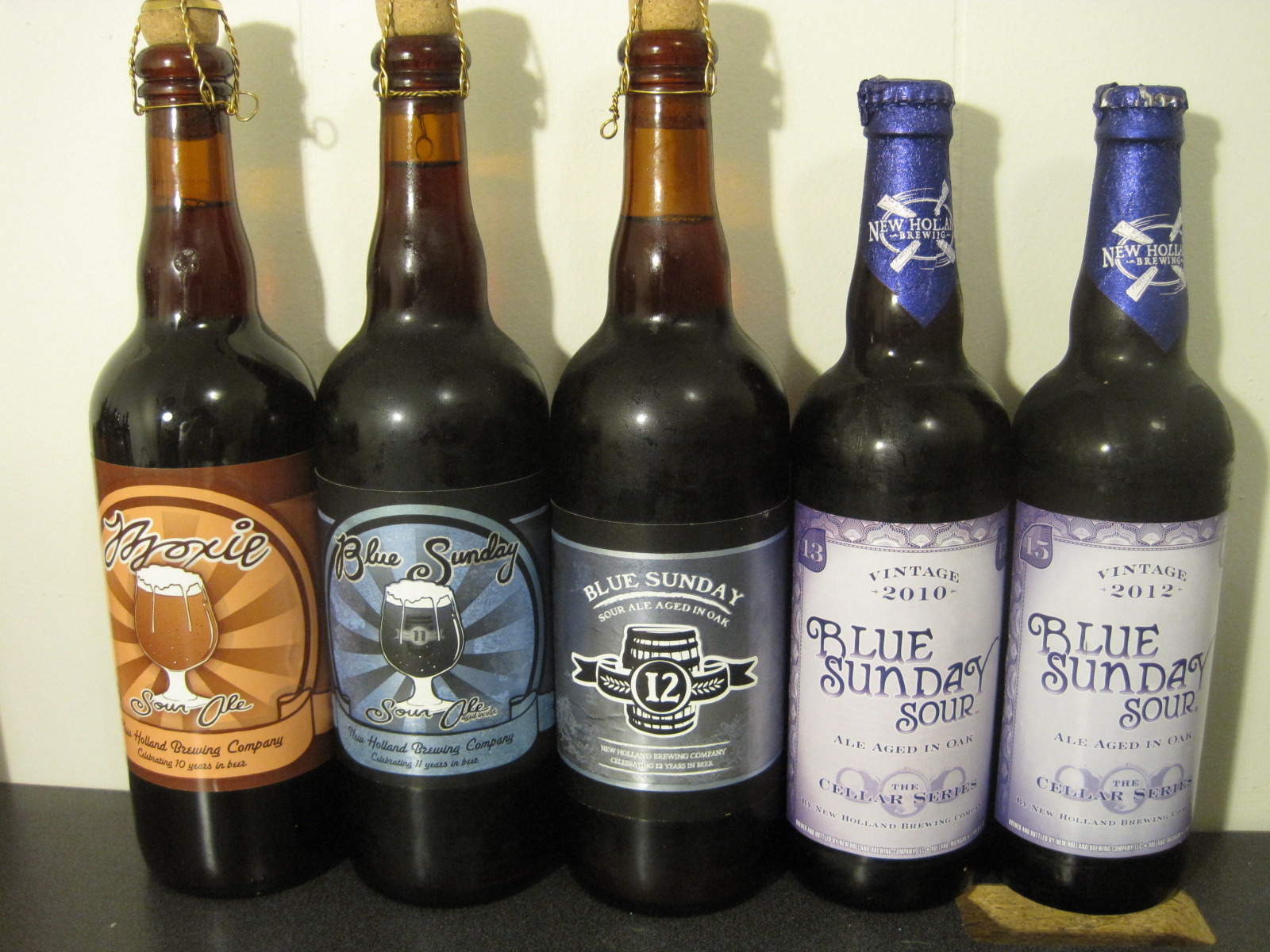
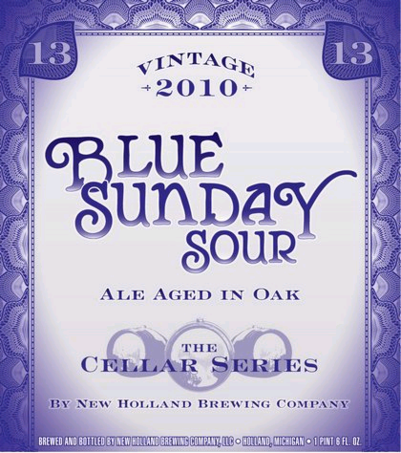
The #2 tasting of the Blue Sunday Sour line-up. This is Vintage 2010 (Batch 13). To re-iterate, I was given 5 of the available vintages that New Holland had in its Library in order to examine the subtle differences from year to year and explore what 2013's Blue Sunday Sour (currently still aging in barrels) could potentially become.

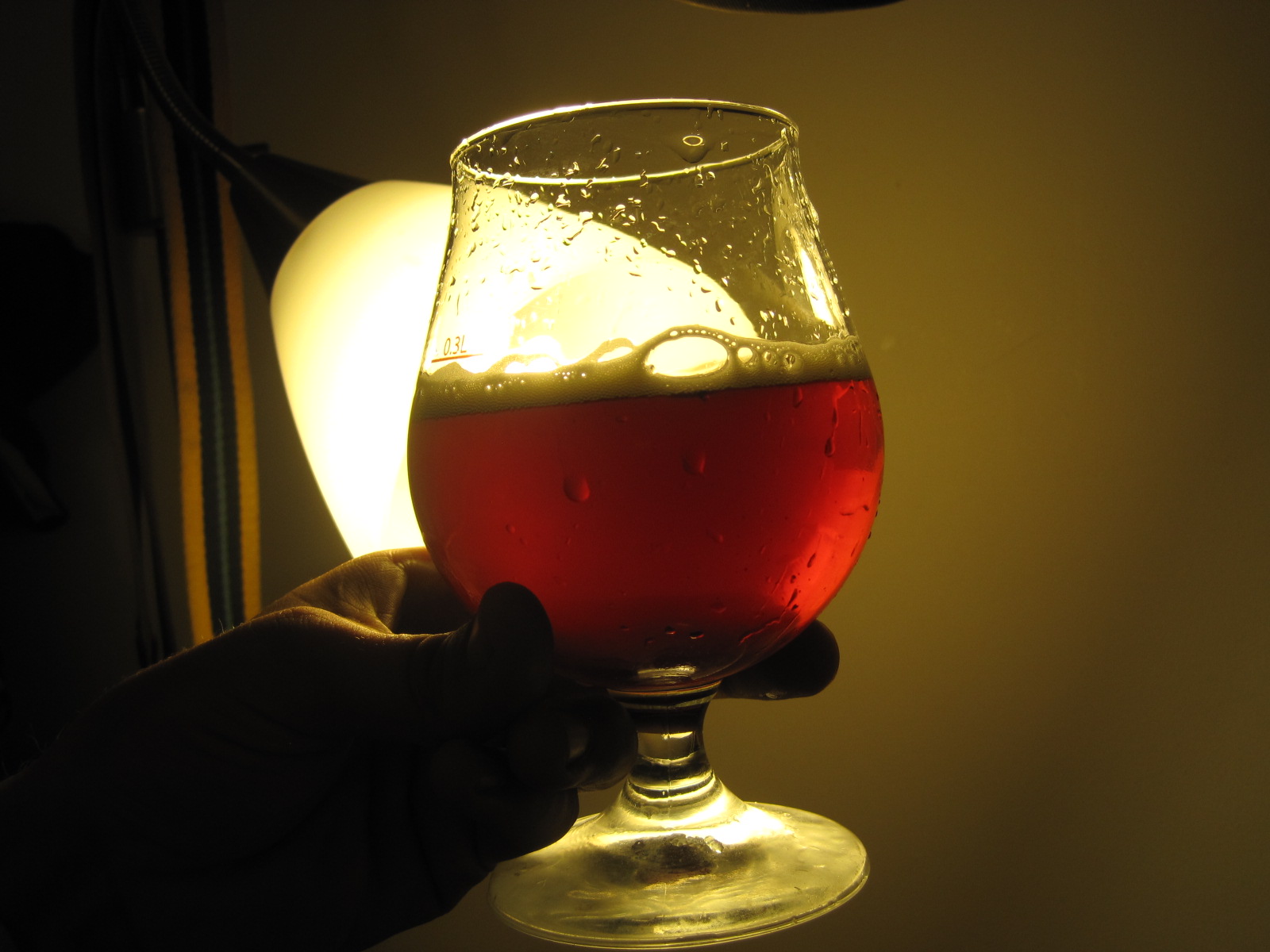
Appearance: Nearly exact in color and hue as 2012, with perhaps more of an amber tint. The head was more sustained in this Vintage, as it produced a suitable soapy cascade across the surface of the beer. It also took on a darker appearance - tan/off-white. Clarity is optimal aside from the color inhibition.
Aroma: More of a mellow fruit presence compared to the 2012, complete with notes of currants, and even some pear. Similarly, there is more of a funk present in this beer too.
Taste: I find this beer isn't as acidic as Vintage 2012 was, so the sourness is mellowed out while different fruits are present. Still, there is a tartness at the end that clamps the jaw a bit upon the initial tasting. Dark cherry fruit prominates too in conjunction with more of a bretty funk that takes an undertone throughout. The oak is dumbed down a lot in this one, even as the beer gets warmer. I kinda like that. Which means the blenders went more for the sour side of things instead of balancing against the wood. Very little, if any Acetic characteristics within this Vintage. As it warms, more of a dark cherry and plum character develops and takes over.
Mouthfeel: Light but enriched with a plethora of flavors and fruit tartness. Carbonation is higher (this bottle gave off more of a spritz when it was opened) and makes for a more crisp, thirst quenching flavor. Acidity is lower. Even with a higher carbonation, the beer rolls more smoothly over the tongue.
Overall Impression: I like the subtle differences between Batch 13 (2010) and Batch 15 (2012). I felt this one accentuated more of the fruity undertones that are produced my the Lactic producing bacteria, as well as presenting more of a suppressed wood aged character. Still I'm stumped on which direction to take 2013. I guess I have to taste more! However I do like this one over Vintage 2012.

Monday, September 24, 2012

Blue Sunday Sour (2012)


This is #1 of my vertical tasting (working back down in years) of the Blue Sunday Sour (Thanks Adam). I received Vintages 2012, 2010, 2009, 2008 and 2007 (known then, as Moxie). This is part of an effort to get my self acquainted with how Blue Sunday has been blended, and tasted in years past and so I can get an idea for how to blend 2013's batch, as that day nears quickly. In any case here is #15 Vintage 2012:
Snifter Served
8.4% ABV

Appearance: Dark mahogany colored, with a mix of light brown and orange-amber, in addition to some dark malted beer mixes. Head is minimal and has a short retention span, but still, bubbles sustain around the inner perimeter of the glass. Wet lacing. The hue is clear, but  haze a hazed glow when held to the light.
Aroma: I first get the lactic tartness that is reminiscent of sour yogurt. Faint notes of very tart cherries, as well as a whiff of wood and oak. Similarly, I draw a bit of green apple in middle. Again as the beer warms, more of the oak takes over the scent.
Taste: Dark cherries and plums with oak taking a very small part in the overall character. Lactic and dry with a middle tone of acetic acid, reminiscent of apple cider vinegar, obviously derived from some interaction of the beer with Acetobacter bacteria. Gradually, as the beer comes to room temperature, more oaky undertones flourish up over many of the initial prominent flavors and becomes the dominant flavor in the very finish, complete with wood tannins, lignin and sap.
Mouthfeel: The texture is nothing close to being thin, as this beer boasts an incredible complexity. The acidity helps encourage this as it bites the back of the jaw and completely dries out the tongue. Carbonation is of medium level, enough to encourage a crisp and full texture and flavor, but nothing to inhibit any minimal undertones.
Overall Impression: The fruit reminiscent flavors is impeccable. From a beer that was originally derived from a simple base, to something of this complexity, it really goes to show the importance of time and the micro-organism involved in each barrels ecosystem. I like this one, a lot.

Saturday, September 22, 2012

Komblucha: Fermented tea with blueberries added

My first contribution to the New Holland Line-up, and something few other breweries have ever considered to dabble in. I've been growing this Kombucha culture for the last three years. I received it the summer going into my Junior year of college. I raised it entirely organic. And finally, what better place to amp up production than New Holland's Brewpub! We began with hot water and sugar mixed in the whirlpool. Fermented with yeast, then innoculated with the scoby in addition to local blueberries. Only made 100 gallons, so get it while it lasts!
Thanks to Brad (our distiller) for the blueberries.

Appearance: Interestingly, it looks quite reminiscent of the cider we have on tap right now. An opaque pale hue with an even pink color. No sedimentation or "floaties" within, which surprises me because I filled the kegs with gravity and I KNOW some Scoby got in there. Nevertheless it looks very clean. No head or carbonation is present.
Aroma: Slight funk is present, but more of a tart fruit characteristic. Makes me think of raspberries, apples and blueberries. Other than that, I think I get a slight wheat note permeating from the glass.
Taste: Up front, a slight bite from the carbonation encourages the acidic tartness that is prominent in the flavor. Unlike traditional Kombucha, I don't get much of the acetic notes I was expecting, but more of an effervescent berry tartness as well as brief undertones of funk. Again, a wheat flavor is present, but located more in the second half. Finally, my favorite part was the contribution derived from the hops. With the cascade and summit that were infused, they provide a flavor that nears the taste of grapefruit rind, a perfect balance to the initial fruity tartness.
Mouthfeel: Like I said earlier, effervescent, but not carbonated. I tried to make it as naturally and alive as possible, so the spritz you get in the front of the tongue is the stored CO2 that is held from the build-up under the Kombucha mother. Light and refreshing, but with a smoother texture. The finish rounds out in an after-breath of alcohol and other attenutated by-products.
Overall Impression: I couldn't be happier with this product. I was worried it would come out with some factor outbalancing the rest, but what I got was a entirely refreshing probiotic elixer that can be easily drunk morning or night. The method to making this was a complete learning experience and shot in the dark experiment. Tart, refreshing, balanced and reminiscent of grapefruit. I hope to make this again!

Tuesday, September 18, 2012

Weekend/Day Adventures: Hop Cat Hoptoberfest


I had known about this festival for several weeks prior to the event date, but was unsure whether or not New Holland was attending. Late in the week preceding the event, Eamon let me know that we were indeed entered in the fest. Here goes round 4 of festival season:

Friday 9/14/12:
The Scoby/mother
Rewind a bit just to include some cool stuff: I spent part of the day tasting through some barrels in the warehouse to decide what will making it to the Festival of Barrel Aged Beers (FOBAB). The latter half of the day was spent kegging my first creation at the pub, and New Hollands first ever, Kombucha! After work I hit the roads for an 8 mile warm-up and then the track for 3 x mile, avg 5:03 for all of them. With 13 miles in for the day, I was ready for some beer. 


Deciding which bottle was Charkoota/Dragons Milk
The plan was to meet Eamon at 8th St. for the Short's tap take-over, but with the bar being overly crowded, we ultimately decided to skip that and head immediately to Grand Rapids. There, we and picked up Dave, made a few more stops and then headed to the Hideout for their multi-tap release. The event entailed beers ranging from: Sour-cayenne stouts, to harvest hop and Michigan based Octoberfests. Still, I found myself enjoying their mainstays over all else. Spending several hours there eventually got the best of us and we decided to make our way back. Again, thanks to Teresa for hooking us up!

Saturday 9/15/12:
Where to begin...
Woke up. Ran 5 miles. Fed the miles.
THEN, the drinking begins.
Poet is a Smoked beer???
I had yet to experience the famous Logan's Ally, that I hear so much about. Apparently they cater to a lot of 3rd shift workers, and conveniently make their "Happy Hour" from 7AM-11AM! We took full advantage of this and made a quick pit-stop to peruse the menu. We eventually split (ironically) New Belgiums Hoptoberfest. Delicious.
Our Crew
We made it to the Festival around 11:05 for set-up. Our beer was already fully hooked up and ready to
 pour. The line-up consisted of Hatter, Poet and Ichabod, with a Firkin of Poet under the table. We set up the banner, decorated the table and distributed what swag we had been provided by the events crew. Interestingly, the kegs were not on ice, but were perhaps chilled enough to hold some temperature throughout the day. The tap boxes were coils and stocked with ice, so fortunately that was enough, it seemed, to ensure an adequate serving temperature. I did manage to get one of our kegs into the Founder's ice bins for some extra chill. Thanks guys.
We met our volunteers/pourers, and I walked them through a quick tasting to get acquainted with our beers. 
The festival started at 12.
It seemed that the first two hours consisted of a trickle of people, but gradually picked up after that. By the start, Jack had joined us and we perused the booths discusssing and tasting a wide variety of Michigan breweries (The festival was exclusively Michigan, FYI). I've found that attending these festivals are great opportunities to meet local brewers, sales reps, and brewery owners, as well as a chance to learn a great deal of all facets of the industry. 
Hop Cat Bean Wrap
For the 12 hours we were there, time did in fact go pretty quickly. 
Midday, around 3:30 we decided it was probably best to eat something. Taking a break from our festivities, I got an opportunity to taste some of the food at Hop Cat. I ordered their bean burrito spinach rap. Not bad, and it was also the first time I actually ate fries in as long as I can remember. After lunch, we went right back to it. Much of the rest was pretty consistent with what we normally do at most fests. Meet people, talk beer and New Holland, and have a good time. And, because we've been attending so many festivals lately, we're getting to see some pretty familiar faces. Shout out to Chaz, brewer at Schmohz.  And Zara, whom we met at the Mitten Bar at the Ludington beer fest. Also, thanks Kaitlin for the beer.
The man on stilts
The end of the night resulted in a dropped growler of some high end beer. Nice work, Eamon.
And we finally wound up getting dinner at Brewery Vivant. This was the first time I had a chance to try their food, and it was pretty damn good. I ordered the Vivant Burger, which Jack claims to be the best in Grand Rapids. I know, you're saying - "Tim, YOU ate a burger?" Yeah, I figured if I was going to have one, what better place to do it than somewhere that really puts work into their food. Still, I think prior to that night, I hadn't had a burger since....Junior/Senior year of college? Anyway, it was great. Eamon got the Duck Confeit  Nachos and a beer he probably didn't need. I had limited my drink consumption for a couple hours, so I DD'd it home for the night.. 
What a day.

Sunday 9/16/12:
I had been thinking about jumping in to bandit the Credit Union Bridge run 10 miler this morning, but that wasn't going to happen.
Over the night I realized I hadn't had much water, so I ended up consuming several pints of water. Woke up feeling pretty good, except for the normal creakiness that comes from running so much. Anyway, the Hop Cat was hosting a brunch for the attendees of the festival, which guaranteed breakfast and coffee/OJ with the presentation of your ticket or badge. We decided to get our running in and ran to the event. With 5 miles under the belt, I was pretty hungry when I arrived. To be honest, though, the food was to be expected when you're catering for 2,000 some people, and not very conducive to someone who, up until Saturday night is rather health conscious and vegetarian. but props to them for going the extra mile!
The plan with brunch was they were to open at 10 and start pouring the left over beer at 12. We were too early to wait around so...hit the roads for more miles and more beer. The next destination was Logan's Ally again. We ordered the Short's Stout and Finch's Threadless IPA.
Logan's Ally
The final stop on our brewery/bar run led us to Harmony Brewery, and a worth while stop indeed. They had just opened their doors and were in the process of doing a photo shoot for the November Grand Rapids Magazine issue. We sat at the end of the bar and ordered some beer as the Adam (the photographer) did shots of Heather (the bartender) pouring pints/samplers and mix drinks. To our luck, the drinks headed our way! I have very little experience drinking mixed drinks, in fact my first one was only a couple weeks ago at the pub. Man, they tasted good! If I knew the names of them I'd tell you, but I'm at a loss. One was chocolate and patron infused and coagulated a bit if it went untouched for several minutes. Another was, from what I can best describe, a Grapefruit Mojito? and a few others.
And, better yet, we got some good photos too, with the chance of being in that issue too!
We also had the chance to talk beer and barrels with Heather (co-owner) and perhaps the chance of getting Harmony a New Holland barrel for some collaboration?
After that, and with 12 miles under my belt, we headed back to Eamon's house, and I got a ride back to Holland.
What a weekend. Until next time,
Cheers!


Wednesday, September 12, 2012

Brewing Hopivore!

It's coming your way, people. This year's batch of Hopivore is now churning away in the fermenter, tasting as fresh as fresh can get.
We ordered over 800 Ibs of hops from a local Michigan hop grower, and because they were so fresh, they made it into the brew within 24-hours of being picked - called Wet Hops.
Below is a brief photo album of the wet-hop additions. This year they were added to the Mash Tun to help prevent clogging the kettle and also aid in extraction. This unique process was key in this years Hopivore.
Enjoy:
Rainbow over the Brewery - 7AM on Saturday

Jason inspecting the hops

Mash Tun filled!

Spreading around hops


Burried


Spinning the rakes

Start filling

THE BEST AROMA. EVER.